Monday, 19 March 2012

On mountain peaks and in valleys below

 Where to begin~ this may be the question that has detoured me again and again from writing a new entry here.
I’ve been living in the ancient town of Bhaktapur, located in the Kathmandu Valley, since leaving my Nepali family in the city of Kathmandu.  Its esthetics  could not be finer in my eyes.  Narrow brick streets pave the way below the multi-family homes/businesses constructed with typical Nepali mustard oil-coated bricks and intricate wood work;
Fresh vegetables allure the passer down nearly every street, usually in multiple locations, momo stalls and tea stands, thangka painting studios and pottery making;
Views out of the kitchen windows where I live present a roof-top world of bricks and launders, of pigeons’ nests and pots of flowers…and on a clear day, the majestic, tear-jerking Himalayan mountain range. 

Every morning and evening is accompanied by a group of elderly men who wear a particularly cute style of hat (worn by many men in the town) playing bells and chimes, rain or shine.

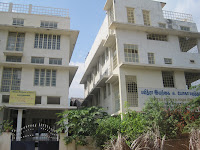
But my intention in coming here was not so that I could live in Bhaktapur, or even gaze at mountains.  It was to study with Dr. Sarita Shrestha at Ma Devi Clinic. 
I have written to some of my family already, telling them that I have fallen in love with her.  It is a strange experience really, I can not quite liken it to anything I have felt before.  As though whatever she advised, asked or taught I would be willing to do or believe.  I agree that this would be an unhealthy way of relating to another in most cases if it were not for one key component: trust.  I trust her teaching;  her energy, her humility and humanness, her joy, knowledge, intuition, vision and experience.  This trust, and a multitude of subtleties in her character I can hardly make sense of, let alone put words to.
Basically, I am doing an internship that I am not really allowed to do, as I do not have at least two years of training in some ayurvedic institute.  There is only one other intern, a very kind man named Josh from California who has ten years of experience working in the ER and for the past three years has been working as an ayurvedic practitioner back home.  He has been keeping a very regular blog on facebook, and has uploaded many pictures of some side trips we've taken if any care to read/examine (facebook- "Josh Greene").

Though skilled as a physician in all sorts of cases (and as an herbalist, she is occasionally sought by ayurvedic medicine companies who will hire her to design certain preparations)  Sarita specializes as an OBGYN, an area of health which I have become particularly fond of.  The degree of practical/clinical participation is far more than what I expected, and I suppose it can be, since many of the laws restricting such participation in the U.S are not present in Nepal. I think I had already looked into three different vaginas by the end of the first day.  But beyond that, the amount of kindred affection I feel for these lady patients is also surprising.  When a patient comes to see Sarita, the atmosphere is one of great vulnerability but paralleled by an equal amount of safety, and also, a deeper level of understanding and empathy that (I’m staring to believe) can be felt by all woman, in all woman to woman interactions of this nature.

When there are no patients, we will simply learn, learn, learn, about more than just medicine…laugh, share stories, and drink a cup of tea at 2:30.  Sarita is a very busy lady; during the days of the week she is not with us at this clinic, she is working at another clinic in the city of Kathmandu. While with her, she is so very present, happy and natural. No one would ever guess the degree of work she has committed her life to.
But she still prioritizes family, designating one day of the week just to spend time with her husband.  The two have no children and were married in their mid thirties- an anomaly within Nepali culture.

Josh and I were invited to attend the ‘Bel’ ceremony her extended family was holding in Bhaktapur last weekend.  It is the first of three wedding ceremonies that takes place amongst women in the Newari ethnic/cultural group- to which Sarita’s family belongs.  The young ladies that were participating were from five to around 11 years old (before menses) and all related.  It is a two day long affair, filled  with a variety of purification/other rituals, and commencing with “Kanyadan” of the girl by her father meaning, “giving away of the virgin.”  The bel fruit each girl marries is symbolic of the lord Shiva, thus protecting her from evil spirits throughout life and, should her mortal husband die before she does, save her from the unfortunate stigma of widowhood. The second marriage takes place around the time of first menses.  Historically at this time, the girls along with adult/elder woman would stay in a house for 12 days and nights, discussing womanhood, what to expect in puberty and marriage/motherhood, teaching skills along with beauty secrets.  Stepping outside and into the light, her second marriage is to the sun.  Though the tradition carries on, it is usually now over a shorter time period, and does not necessarily entail remaining inside the entire time.


Two junior male doctors take one day of the week to teach, along with an ear/nose/eyes/throat doctor (a particular subcategory of ayurveda) who is also a surgeon.
On Fridays I walk the 45 minutes it takes to get to the rural village of Sipadole with one of the jr. doctors, Dr. Nirindra, where he works at Ma Devi’s sister clinic on that day of the week.  He is 26, shy, on one hand sweetly naïve and on another,  ridiculously intelligent, a never-ending encyclopedia of information.  His passion for medicine and teaching is evident and he seems to enjoy sharing it with me, whether it is regarding the medicinal value of the plants we are passing, what we have been going over in class…really, anything I am curious about or happens to come up.  Not so many patients have been coming during the time we are at the Sipadole clinic, so we’ll usually have a language lesson as well.  Yesterday he even taught me how to put in and take out stitches!  One thing he doesn’t know? How to swim. So I have promised to teach him how to do this (one thing I actually do know quite a lot about).

Though Bhaktapur is a very special town, Sipadole appeals even more to my heart.  It is a village, filled with fields of spinach, cauliflower, calendula…the Himialyas in the distance, bordered by jungle.  A little old lady, traditional healer- herbalist/midwife- makes medicines for and opens/closes the clinic each day.  Dr. Nirindra will translate conversation for us, but I so wish I could speak to and understand her.  I really am inspired to learn Nepali- I’ve even begun a spontaneous language exchange with the Baba from the temple near my home in Bhaktapur on certain evenings.
 Stangely, I never felt this way in India with Hindi.  I tried to make myself inspired, but it didn’t really work.  Now, in this place, I feel a strong desire to integrate at a deeper level, and also to continue returning in the future, so learning the language becomes fun.When the formal internship ends in April, I will move to Sipadole, making instead weekly or bi-weekly walks into Bhaktapur.   

The sun has gone down now and the chimes are beginning. 

I have absolutely no plan from here.  No concept of when I will leave, nor what particular perception I will leave with.  All that is clear now is that HERE could not feel more right.   


Tuesday, 21 February 2012

Of Pizzas and Pulses


Leaches to be used for blood-letting
treatments at Ayurveda Hospital
How many pools of thought are there to swim in, I wonder? There must be infinite, but would it not be reasonable to assume that within one region of one country regarding one medical system, there might be a certain degree of uniformity? The answer is yes, but as for the degree, it is far more narrow than I could have imagined.

I've spent the last month in Mysore, Karnataka, with a brief dip into Kerala during that time.  In Mysore, I lived with a woman who- besides the constant flattering she bestowed unto herself- was really a kind, gracious and helpful lady. Her Brahman status, doctorate degree in literary arts and experience with long-term-visit foreigners made her very well connected and respected in a variety of communities. The day after a serendipitous (of course) visit to her house and deciding to live there, she called her friend, the principal doctor of the pancha karma ayurvedic hospital in Mysore, who also teaches at its
adjacent university.  He was a very busy man, but on behalf of my house mother and my genuine interest and dedication, he offered to provide me with one-on-one tutoring for as long as I was in town.

Venkatesh- would give medicine
made from gold ash to to children
every evening. Immune strengthening.
No need for vaccinations.
Treatment underway at Panchakarma
Hospital for Arthritis patient.
Certain days I would meet him in the big hospital, other days in the tiny clinic where he worked in the evenings and still others he met me at the house where I was living. The evenings/nights I spent at the clinic were the most enjoyable and rewarding. A beautiful older man, well-versed in the Vedas, named Venkatesh, worked at the small pharmacy.  In the even smaller consulting room, three different doctors would come at varying hours/days.  Doctor Basuraj, the man I was regularly being tutored by, came from 4/6:00pm-9:00pm after having spent the earlier portion of the day at the hospital; a younger female, Dr. Sujata was in between 8:00am-12:00pm; and on two Wednesdays of the month, the miraculous Dr. Aisha (who I will speak more of later) would spend all day seeing patients.
So here I was able to observe and meet personally with three individuals who shared not only the same geographical place of origin and medical schooling but the same clinic also, and STILL detect a relatively large degree of difference in their approaches to diagnosis as well as treatment.

Perhaps the difference between nature-based medical systems and their respective healers, and allopathic medicine and its respective doctors/nurses/etc is the same as the difference that exists between wild/heirloom crops and ones which have been modified to fruit in a certain way.  Though diversity in the later exists, the diversity in the former will be much greater.  Being a firm believer in the power natural ecosystems have to inform our social systems ('social-nature-mimicry' was actually the initial idea I had for the subject of this grant) I see such diversity as a positive, though potentially confusing, thing.    

However different, their opinions were not necessarily in opposition to one another and did seem rooted in a similar place.  Rather, the difference was due to the healers' personal sense or feeling.  One might take a pulse while another only listen to symptom complaints; one might prescribe a prepared herbal syrup and oil while another (for the same symptom) would advise a topical application of leather burnt to ash mixed with coconut oil.

Does this make one any more "authentic ayurveda" than another? At this point in my journey, having already witnessed so many different approaches, I'd already started asking myself, "what IS ayurvedic, actually?" By definition, clearly it is knowledge of how to live a long and healthy life, but what IS that knowledge if its content is of such diverse knowings? 

 Its curious that now, after traveling for five months, such rudimentary questions are re-entering my consciousness.  But now at least I am starting to arrive at answers that reach a more than superficial level of understanding.  For example, I've begun thinking of ayurveda like a pizza.  What is a classic pizza?  Even this might stir up controversial responses, but I'd say that in general, the most basic response is: cooked dough that has been topped with tomato sauce and cheese.  But dough, sauces and cheeses always have a slight or major variation in the way they are prepared! Not only due to the cooks' style, but due to the consumers' preference and needs, availability, and certainly many other factors.

So it is with ayurveda.  What remains fundamental to Ayurveda is (among other things) the concept of the doshas, dhatus, malas and elements, which together explain the cause and cure of health and disease; but what precise measures are taken for treatment, however the problem theoretically got there (how to make a pizza, however it is theoretically made…) is where the true diversity as well as the true art of ayurveeda is birthed.  And like all things, the form the art takes is a product of one's nature and her/his experience.
Preparation of the ayurveda's famous
"Chywanprash"- a 3+ day process

 The owner of the 90-year-old ayurvedic medicine production company that sold medicines to the clinic I spent time at, explained ayurveda in a way that seemed more genuine to what I have experienced ayurveda as being rather than based only on theory or faith.  He said, "Ayurveda is not from one part of India any more than another. It developed as small systems of medicine from place to place around India with herbs/minerals/foods/animal products based on the locality."  It only became the classical medical system of INDIA, or of the Hindus, after conferences began taking place to put together notes and merge information.  

Today in India, the government allows anything herbal to be titled as ayurvedic, its potency gauged on the 'active' constituents being standardized at a certain level.  The man with whom I was speaking felt this was ludicrous, maintaining that classical ayurveda and ayurveda of antiquity would gauge the plant-medicines' potency on factors like growing conditions, time of harvest and method of preparation- the more local, wild and un-mechanically/synthetically processed the better.

 To me, this intuitively feels correct and makes ayurveda more universally applicable. Still, my experience continues demonstrating that more important that any theory or particular system of healing is the healer her/himself.  I admired to style and teachings of all three doctors who worked at the clinic where I was spending time, all for very different reasons.  But I will write here about Dr. Aisha.  Like I said previously, he only worked at the clinic once every 15 days; the others are spent at a different clinic where the lines extend for 100+ people and are usually a two hour to wait.  So, I was ever so grateful that at the particular time I was at the 'vacation' clinic, patients were sporadic and he felt energy enough to spend time with me. 


Dr. Aisha is one of those healers, the ones you hear come from exotic places like south India, having certain gifts/powers that are easily spoken of through the mouth, but difficult to completely believe in the head. 
Dr. Aisha
Unlike many other doctors/men I have met since the start of my travels, Dr. Aisha was not at all egotistical or patronizing.  He expressed curiosity about me in as honest of a way as I expressed curiosity about him.  Practically, he was just as much a highly capable herbalist as a medical doctor.  He could recognize 4.5 thousand plants and in his prescriptions, would recommend whole plants/seeds as often or more than prepared medicines.  In fact, he did not believe the ayurvedic medicine production business would survive as it is too costly for many Indians. 
 What really made this man stand out, though, was his being the only person recognized in India to read seven different pulses (as opposed to the still very impressive three read by ayurvedic doctors) due to the oath he took with his guru, who had the same supreme mastery.  Dr. Aisha told me at one point that for all, there is a supreme power.  That it is knowledge + inspiration or soul power that are the essential ingredients for one to become master.  In addition to taking the three or so minute pulse reading (after which he provided patients with their pulse rate, blood pressure, two types of blood sugar, HDL and LDL cholesterol, creatinine and hormone levels, and other information depending on the case) he would examine the back of the tongue, from which he could determine visually the health of every organ in the body.  I had been tested clinically for much of the information he gave me, and the diagnosis of both were nearly identical, including the specific lumbar vertebrae that are out of alignment in my back.  He also informed me that I had a liver infection, something I would not have guessed, even though I had been feeling a discomfort in that area of my body for the past couple of weeks.  For my particular condition, he prescribed 'isomgog seeds,' claiming they would work as a surgeon, taking care of everything out of balance.  For all of what Dr. Aisha had in what seemed to be cosmic brilliance, his recommendations were generally of a simple nature, and his total presence /calm with each patient (I later visited his usual clinic, where the line would have indeed been at least a two hour wait) was inspiring along with a great teaching.  

~

I left India and am now in Nepal, writing on the computer of the lovely Nepali family I met while in Nepal 3 years ago. 
Even upon arriving at the airport I could feel an extreme difference between countries/people.  I don't know what exactly at this point creates such a strong energetic difference, but will likely get a better clue as time passes.  All I know at this point is that I feel more at cultural/personal ease than I have since leaving the states, even though I am living in and am surrounded by far more humble conditions.   And to top it off, I will begin my apprenticeship the Sarita Shrestha, the individual who comes closer to someone I could call my 'medicine guru' than anyone else.  If time avails its self to anyone, I would highly recommend reading the book by Michael Crow titled, "In Search of the Medicine Buddha" in which a certain chapter highlights Sarita and her work. 

Saturday, 28 January 2012

Grow Trees, Eat Fruits

 I arrived in Coimbatore, Tamil Nadu, with the intention of staying at an 'ayurveda village' outside of the city, in order to experience first hand ayurveda, not just as treatment, but as a lifestyle.  The language here is Tamil (a language claimed to have a spiritual/energetic significance equal to Sanskrit). English, I soon found, was far less common then anywhere else I've traveled in India. The few people who did seem to understand what I was communicating- attempting to get on the right bus to find the address I had written down, that is- ushered me from one bus to the next, leading further and further out of the city, until finally the bus driver motioned for me to get off.

What stood in front of me was a large white building set against a small village and the blue-ridge mountains. The sign read, "Pavitra Nature-Yoga Hospital."
Hmmm....ok, this looks interesting....maybe they know where I'm trying to go...
The next five hours were spent learning about the spot I had landed from the founders' son, Shakti, who is also a naturopathiathic doctor.  The hospital had once been a small hut where Shakti's parents- Pavitra and Dr.Subramanian- would treat patients.  The couple had not studied at a college/university like Shakti, as these sorts of institutions for traditional Indian naturopathy are a relatively recent development.  Rather, they had lived in ashrams where living and healing in accordance with nature was instructed, and studied with a variety of different Gurus (teachers).  Their traditional teachings in conjunction with 30+ years of  personal experience was what made the hospital's structure and efficacy the way it is today.

This is not a place exclusive to the affluent, traveler, or relatively healthy person.  Rather, it treats all classes, rarely any westerners like myself and ANY DISEASE.  Be it immunodeficient/degenerative, diabetes,  mental disturbances, CANCER, you name  it- they will take the patient (who has usually tried all other known options), treat, and make significant improvement if not completely heal the disease.  Perhaps the most miraculous, however, is that the hospital treats all patients more or less the same way. What??? This concept would be totally ridiculed in allopathy; even Ayurveda differentiates based on personal constitution.  Shakti shares with me their philosophy, that it is due solely to humans living in an "unnatural" way that any and every disease is able to take seed and develop in the body. The hospital successfully heals countless patients because its routine of cleansing, purifying and nutritive measures puts the patients' bodies and minds back into alignment with the 5 elements of nature: earth, air, water, fire and space.  It utalizes what nature offers in its complete, unmanipulated form.  Because of the healing quality of the patients' diet while at the hospital, the family does not even perscribe any sort of additional medicine supplement, natural or otherwise.

The routine is so very simple, but strictly observed, including morning and evening cleansing (enema, nasya, oil pulling, eye wash), sun baths, yoga, pranayama and most importantly, intelligently designed LOCAL and organic diet (FRUITS being of the utmost importance) in conjunction with proper fasting. Oh, and a cup of freshly pounded, special grass juice around 10:30, reminding me of the times when I was a little girl and would pound grass with my mother's mortar and pestal, pretending I was making medicine.  However tremendous the efficacy of the hospital, though, Shakti and his parents emphasized that what took place there was just a formula, which was by no means 'trade-marked' by the hospital, but one in which the family intended for patients to learn and subsequently be able to apply in their day-to-day  lives. Both father and son trade on and off giving informational and inspirational lectures in the mornings to the patients, but also welcome anybody from the village to attend.
 
It so happened that a German couple was present, trying to cure an allergy, and that it was an option for me to stay if I wished, though the minimum attendance was ten days.  After spending two days at a near-by guest house, it became evident that observational learning in such a context was very limiting.  So, I checked in with, ironically, fairly good health (for once!).

  There were approximately 13 other patents at the time I checked in, some with live-in attendants. Three had cancer,  one younger boy was mentally ill, another older man had kidney failure, and another unable to  fully move his right arm.  A mother and daughter were there to loose weight and learn how to eat a healthy diet, and another woman, having just regained her periods after years without, had recently left.
At first I felt a bit out of place, this healthy, western, young thing.  I told  people that i was doing research...and that I was trying to increase my bone density and occasional back pain caused from a curve in my spine (which is actually true).
 
We all seemed to evolve into a sort of extended family after a very short  period, even though only a couple of people spoke English. The Indian ladies made it their business to ensure that the German girl and I always washed ourselves, our laundry and dressed correctly; the man with kidney cancer told his attndant in Tamil that if he spoke english, he would be my best friend.

  After the evening meal, the German girl and I would usually go into the family's quarters of the hospital and talk to Shakti, Pavrita or Dr. Subramanian, hearing stories from their own experiences/learning/perspectives about nature cure.  The content was vast and diverse, from Pavrita's aunt who had to go on a 40 day  fast, to their family friend, who only started eating cooked vegetables (as opposed to the purely coconut and banana diet he had been eating since his mother's breast milk) so that a woman would marry him.

 These stories coupled with what I witnessed taking place and personally experienced in the hospital secured in me a trust and understanding about this healing/lifestyleIe that I do not think could have existed otherwise, even if recommended by a close friend, health professional or read in a reputable book.  It totally shakes up and deconstructs the entire notion of what creates good/bad nutrition, and subsequently health/disease, by most all western and many other standards. .

  I understand with more certainty why different ways of eating and approaches to medicine have evolved~
 
*for the sake of working with what is available in the environment (pomegranates, grapes, etc. do not grow   everywhere in the world, let  alone year round) and on the other had, not utilizing vitamin-packed fresh local/organic foods when available.    
* Unwillingness to alter food habits, thus requiring acute-action
  medicines when sickness becomes present;
*Disbelief/lack of information regarding the universal healing power of proper food and proper fasting;
*Brainwashing from food and medical industry.
 
The essence of what I was seeking in Tamil Nadu most definitely transpired, though in a very different form than expected.  I am curious now to see  the methods and efficacy of the "Ma Devi Ayurvedic Hospital," which I will be interning and volunteering at in Nepal, starting in late February.  Dr. Subramanian told me upon my arrival that at Pavitra hospital, I would learn REAL natural healing, REAL ayurveda. Really, 'ayurveda' translates to, 'the science of life.'  And the way I see it, even if Pavitra Hospital didn't follow the highly complex formulas of ayurvedic scholars/sages Charaka, Sushruta, etc, they most definitely had  formulated an authentic and precious method of living- one that may even be more applicable and useful to the world at large than what is traditionally taught as India's Ayurveda.

Wednesday, 28 December 2011

Extremes brought to balance


 This past month has placed me in a role of witness, customer and worker within a spiritual/healing supermarket.  Rishikesh, located directly along side India's holiest body of water- the Ganges river- set also among mountains as a gateway to the Himalayas.  It has been a pilgrimage stop for years, due to its position, temples, ashrams and overall positive energy.
Today, it serves the same purpose but with probably 50% more the marketing and outward glamorization of such pursuits then it did 50 or even 25 years ago.  Yet, this development was one of the reasons I was so keen to 'briefly" visit; how has modernization along with increased tourism positively and/or negatively influenced the quality of ancient Indian healing modalities, specifically, Ayurveda?

As usual, I began by getting sick, this time with a high fever.  Hooray! More inspiration and focus for research! After regaining strength enough to move and think clearly, I decided to finally purchase the four-volume ayurvedic texts by the renowned Charaka, both to learn about fever and have on hand for the rest of my life.  Ayurvedic classics extend beyond this man's works, but his contribution was arguably one of the greatest and most influential. The material here is said to have been passed down initially by the Hindu Lord Brahma, down from one divinity to another, and then finally into the hands of human sages. It was finally Charaka who wrote down and published the texts now titled "Charaka Samita." .

From the chapters listed in the table of contexts, these books seem to contain the solutions to every possible human health condition and maintain throughout that at the root level, all sickness is due to an imbalance of the doshas OR to an "evil spirit"- aka organism.  Still, the solutions are rarely ever simple.  To really begin treating fever for instance, one must first diagnose which of about 120 varying types it might be.  And even if correctly diagnosed, to treat exactly according to Charaka would be very complicated it seems for the average Indian man or woman, let alone for individuals in other parts of the world where the majority of prescribed herbal/other concoctions are inaccessible.  Of course, these texts are really only meant to be read/used by individuals in the later part of their Ayurvedic studies, either at the university or with family mentors. So I decided to bring them in to go over with the doctor I'd been spending time observing and conversing with lately.  Dr. Arun Sharma  could clearly connect to a contemporary clientele though much of his training was received under traditional, strict ayurvedic mentorship where no modern diagnostic methods (blood tests, etc) were used. During my stay, he was completely welcoming of presence and generous with his time, sharing my enthusiasm of the subject, making certain I understood what he was explaining all along the way.  

As time passed, I came to perceive the 'supermarket' quality of  the area simply as a commercial demonstration of the wide breadth of India's ancient wisdom.  And ultimately, upon deeper contemplation, it is evident that the nearly all-encompassing intention is but one: to purify the mind and body for the purpose of realizing true harmony in life and subsequently, enlightenment.  One can separate India's classical ayurveda, yoga, meditation, astrology, music, etc. but theories behind and experiences within each have all essentially sprung from and towards a similar paradigm. 

So, while in Rishikesh, I decided to take part in some of the peace-health-frenzy.  I continued to meet with the doctor occasionally, began a daily morning zen meditation, took the occasional yoga class, a couple of classical India violin and and sitar lessons, received and ayurvedic massage and even a quite astonishing vedic astrology reading from a world renowned astrologist who happens to reside in Rishikesh.  The guest house I was staying in even turned into a sort of alternative health clinic; a man from Russia had his weightless exercise harnesses and computer 'bodily-electric-impulse" technology, the older woman from Germany who rents a room on the top floor offered ora/shakra readings, and a long-term guest from France happened to be a reiki master.  And yes, I dabbled in them all!  Simon, who met me in Rishikesh, commented that my apparent butterfly nature of hopping from one wellness flower to the next would  just bring about more confusion.  And the entire time, I agreed completely.  But this was a crucial part of my experiential learning.  To not be told but FEEL, that  no matter the merit behind one philosophy or particular way of being, experiences of peace dependent on others can only be relatively short lived.  As for health, it is a condition inextricably linked to our mind state, whether past or present.

With that awareness, we headed to an open Vipassana course in Rajastan- where excessive external information has little/no room to enter- that would end on Christmas day.  Advice to all for an at once inexpensive and priceless Christmas gift: complete a vipassana course.  They are all over the world, non-sectarian and free to the public.  I can not speak to the details of any experience other than my own, but know from speaking to others after silence broke that similarities occurred throughout. It did not serve as a retreat or escape from reality as so many self-realization sorts of courses do; rather, it provided  the means of feeling and continuing to live in a reality of balance and harmony. 
Is this quality of experience at the root of why so many, like myself, take part in the mad health-rush of Rishikesh? Spend hundreds of dollars at rejuvination spas? Perform endless devotion to this or that god? Is this really why I am here?

~

On the way to South India now to live in an Ayurveda village for some time.  I feel so grateful, like the teachings presented one by one are continuing to present themselves at exactly the time I need them most. Or maybe that's just the way things work around this world. 

Tuesday, 15 November 2011

More than just Tea


It must have begun about a month ago- this crazy new zealous I'm experiencing about tea- while meditating, shortly after arriving at my family's house in Panchkula. 'Chai' crosses cast lines, appearing EVERYWHERE, perhaps the single most common item of human consumption besides water.  But where specifically is it coming from (I sometimes wonder if this inquiry rooted in a stubborn environmental ethic will ever cease to haunt/inspire me). My tea enthusism is not entirely new.  I've certainly held a deep appreciation for Camellia sinensis in her various forms and qualities for a number of years.  But perhaps my appreciation for tea has never been so inspired till just recently.  Even my journal cover and pages within are adorned with "Juniper Figlet Blossom's Healing Tea House" logo/art/designs for a future vision. 

Himachel Pradesh is a very minor tea growing region in India, but being there, I managed to find out about a city called Palampur, where a tea cooperative existed and which was only 34km away from the place I'd been living.  After happening upon a friend (the same one I'd met in Armritzar and traveled with to Mcleud Ganj) who was celebrating in part becuse he'd just finished a photo class, was in the process of developing a photobook on chai and was now also wanting to travel to Palampur, I decided the visit must be fated. We left without any specific idea about where exactly we were going or what exactly we were going to do, as usual. I had the name of a sweet looking tea estate I'd glanced at on the net; he had a workable phone; and we shared an equally new and current excitement about tea.

The combination of heat and nausea after the bus ride and a glnce on the way in at the big, impersonal-looking tea cooperative factory we’d heard about led us to the decision of calling the tea estate immediately.  The woman and man on the phone were exceedingly friendly, and our preconceived visit turned into a significantly-reduced price homestay.  So continues the trail of divine and perfect placement... “Darang Tea Estate” was established in the 1840’s, uniquely, by an Indian (rather than the British).  The mother of the current owner (Naveen) was born on the estate and, also uniquely due to her gender, inherited and managed the estate for many years, being her parent’s only child. To see/learn more about this beautiful place go to - http://www.darangteaestate.com/

During the time we were there, I was ablt to complete a short book about tea, Ian took a load of excellent photos and we both spent hours sitting with the Naveen and his wife Neeru talking about life and tea, over many cups of tea, of course.

The flavor is distinct from all of the tea I’ve had in India thus far.  It is black tea, but with a lite color and taste but is not weak. Naveen discussed with us at length about their particular variety of tea compared to others, why it does not require any fertilizer and how to make the perfect cup of tea;  Neeru shared a story about the German Ambassador who once came with his wife for a visit and later ended up ordering 20 kilos.

The estate is relatively small, so all of the tea they grow goes to be processed at the cooperative in Palampur. From there, they and the rest of the world buys it in varying qualities/prices. Of course, they ask about us and I bring up Ayurveda.  They share the now seemingly universal-Indian sentiment that they prefer Ayurveda because_____? It has no side effects!  They also confirm in my mind a perspective I’ve heard from a variety of others- that the reason for the decline of Ayurveda’s presence in India  was due to the Mughal Empire, which became the dominant power in India between the mid-sixteenth and early eighteenth century.  Ayurveda was included in this Muslim Empire’s strong attempt to eliminate anything Hindu.  This also explains why Ayurveda continued to flourish more in the south like in Kerala, as the Mughal’s presence/dominance was never fully realized there as it was in the North.   Neeru said she was happy to witness Ayurveda’s resurgence today.

Here is where it gets interesting.

She continues by saying, “In fact, I believe there is an Ayurvedic center or something close by…AYUR maybe or AYUSH…”
Hearing  this I exclaim, “AYUSH!”  Along with being an acronym that the Indian Government's Ministry of Health uses to refer to 
The Department of Ayurveda, Yoga and Naturopathy, Unani, Siddha and Homoeopathy, AYUSH is a brand of Ayurvedic medicine. This particular brand is special to me not only because it is one of the only brands I’ve seen in India that offers a selection of organic products, but because it is sold by the women in Bellingham I once interned for, and owned by a pair of brother Ayurvedic doctors that work outside of Bellvue!  While still in Bellingham, I had not only gone with my mother to visit their actual office, which was closed that particular day, but had emailed a number of times in hopes of setting up some sort of an arrangement where by I could visit their production facility and/or farms while traveling this year. With no response, I decided to forget about it.  But God did not! Now here with these people, simply because of a whim driven by heart-passion, I am told that the headquarters of this multi-national Ayurvedic company might be located close by in the next village. 

“But I am not sure what it is called” she says.  “I have to go that way tomorrow anyhow, so we can stop by.” The couple also has an organic vegetable garden, orchard and a few cows from which they receive their milk and make cheese, yogurt and butter; so you can imagine our minds and bodies were both duly nourished by this point.

~

Alas, it was AYUSH! And though the larger, posessing more modern facilities than my family’s factory in Patiala, the space is still remarkably small considering their broad clientel.

It goes like this.  There were four brothers. Two became Ayurvedic doctors (one of which married an Ayurvedic doctor), one a Veterinarian and one an engineer.  All were raised by a wonderful mother who was also an exceptional Ayurvedic doctor, but gave up starting an actual practice in order to raise her family. The doctors and the Veterinarian wanted to move to states, so they did.  But they and their father
realized it would be vital for the medicine production part to take place in India in order to substantiate the brothers’ practice in the states (if you havn’t noticed, traditional Ayurvedic medicines aren't too easy to come by in the drug store) so the engineer,  Jilender Sodhi, became the managing director of AYUSH.  He is the one who greets us at the door, turning us over to be hosted by his wife as he is presently needing to attend to some plumbing predicament that had taken place the previous night. I see pictures of Seattle on the wall and internally celebrate the beauty of such a small world.  And it turns out I am not the only one.  The two women,  Neeru and Jilender’s wife Bankaj, are now making connections of how they met each other before and have mutual friends. 

 Neeru says, “all of these years I have been driving by and seeing this place…can you help my 90 year old mother-in-law?...we are your closest neighbors! Anytime you free you must come over for dinner. It give me such a pleasure.” 

Bankaj is also a wonderful lady.  She says she was personally not an Ayurvedist before marrying into the Sodhi family but now is, and not at all by force.  She shares her personal experience using a preparation made with Bosweelia to cure chronic swollen lymph nodes in her neck and also an amazing story about her daughter, whom she’d had from a previous relationship.  Her daughter had been very asthmatic all of her life and had developed an immunity to antibiotics at a very young age.  Her mother-in-law told the girl to drink a tulsi decoction with honey and ginger for 40 days.  Much to Bankaj’s surprise, her daughter was cured!

The facility serves as the center for the ingredient delivery, lab testing, medicine preparation and also offers pancha karma.  Unlike Patiala Pharmacy, which uses a plethora of traditional Ayurvedic recipies that included plant, animal and mineral substances and did NOT have a lab for testing actual medicinal/constituent value, Ayush uses only plant matter and does have a small lab for testing.  To me, the reasoning for for each is clear: Ayush started in 1994, a main focus being to serve an international community where in fact most traditional Ayurvedic formulas would not be permitted to import; Patiala Ayurvedic Pharmacy was founded upon the principles of remaining authentic to traditional formulas and to serve the local Indian population.  

Though Ayush may not be as "grass roots" as Patiala in the sense of its actual medicine-making processes, it is more so in other respects.  Where Patiala uses a middle man, Ayush procures all of their ingredients directly.  "People will stand out on the corner here with plants they've grown or collected in the wild," Bankaj explains noting a woman on the corner holding a bag of walnuts. "We will test the quality in the lab and then (usually) buy whatever we need at the time."
The other systems Ayush has set up to receive the plants/herbs needed to make their medicines tickeled me almost more.  In order to increase the amount of organic, not only on behalf of the medicines but on behalf of the ecology and safety of the environment, as well as to increase individual (specifically women's) financial self-reliance, Ayush will GIVE people in the village the specific organic seeds for the medicinal plants they need. Ayush will then buy the harvest for the same amount as would be paid in the market.  In addition to the profit the farmer makes from the direct sale, they also receive a part of the actual Ayush share.

After a tour around the facility, Jilender, finished sorting out the plumbing issue, invited us all to transition ourselves into the main office to talk. It turns out that Jilinder was the first man to launch an Ayurvedic product in the U.S, back as recently  as 1989.  And it was only after they switched marketing the product under the name "Ayurvedic" to "Traditional Indian" medicine that the business became popular. He now works long, tiresome hours, especially as his family lives on the top floor of the facility, but says he loves and believes in what he does, acknowledging the greater significance it has on benefiting the local and international community.   

Coming from a place of seeking what I want to do during my last year of college and post graduation, I left Ayush feeling a strong conviction (not to say it won't change) about going to Bastyr and doing my clinical internship with the Sodhi brothers. How simple a solution to many of my past conundrums: 1.) How to suit Ayurveda to a Western environment 2.) How to learn about the herbal pharmacopea of a place/climate I actually want to live in while still learning to utilize Ayurvedic theory and principles in practice and 3.) Not have to learn Hindi/Sanskrit fluently in addition to a vastly complex healing system- which would be necessary if I were to attend an Ayurvedic college in India.

I suppose the tea house business will have to come a little later, when I am able to offer more than just tea.

Monday, 7 November 2011

Touché, Universe

I asked to go on an adventure, keen to experientially learn about alternative modalities for treating illness;and that is truly what I have received.
Clearly, it has NOT been ten days since last I wrote, but here I am.  The first full day began with extreme sensations of nausea and drowsiness, feelings commonly associated with prolonged meditation, and a slightly uncomfortable itch around my shoulders without any sign of irritation on my skin.  The helper girl (known in the center as a "dhamma worker") said to me smiling, "I think it must be working."  Then the first expressions of red spots appeared and my mind jumped to all sorts of possibilities...bed bugs? scabies??  I've tried to be careful but HAVE slept in a couple of questionable arrangements since leaving my family in Panchkula...maybe I'm allergic to the Ayurvedic formulas I'm taking for girardia?

Though Vipassana is a silent retreat in nearly every sense, one is allowed to speak if need be to the few dhamma workers and with the female 'teacher.' A male and female teacher/master-meditator sit meditating in front of the respective gender groups of meditating students throughout the day.  From the hours of noon and one and after each meditation session, students are given the opportunity to ask questions one-on-one.  Everything must first be approved by teacher before it can be executed.  When I first brought up my itching predicament, she advised me to stop taking the Ayurvedic preparations (which I initially had to ask if I could take) and to ask one of the workers for "prickly ash" (which turned out to  caladryl lotion), so I did.  But the bumps and itching just became worse.  My only solace was that the quality of their appearance as they evolved and increase/decrease in severity associated with temperature signified that it was at least not scabies or bed bugs. 

When I finally showed the dhamma worker helping me a section of the bumps on my skin, she started getting more concerned and actually called teacher to my room to have a look.  Teacher, with deep concentration but calm said, "ah, we call this 'pit' [an ayurvedic term, 'pitta']. It is when to much heat and cold conflict in the body.  She must take in cool foods. Oranges. Amla." She also told the dhamma worker it would be good if a Tibetan doctor could come up.  When I explained what an anti-histamine was, she thought this would be a positive thing too. 

But just because one of the teachers approves something doesn't necessarily mean it will happen.  The manager of the center reported to me via the dhamma worker that a doctor would not be allowed in the vicinity and they could not provide me with the anti-histimine because they were not doctors.  Amla was not on sight and oranges had only been offered with one meal. My only choice was to stay or leave by the time I'd spent 4 nights because at noon on that day, the actual Vipassana initiation would take place.

Even without having taken part in a Vipassana meditation retreat, it is not difficult to recognize the ridiculousness of the situation: waking at 4am after minimal sleep from constant itching with no relief; sitting approximately 9 hours a day, itching; remembering that a parasite called girardia is currently inhabiting my large intestine, happy as can be, no longer being eradicated with an external substance.
Who knows...
Was it an extreme psychosomatic reaction to the meditation? My body on a physical level ridding its self of deeply-rooted poisons of the mind?
Was it my body-intelligence screaming to me, "get the hell out of here you crazy fool! What do you think you are doing, following so strictly the code-of-discipline of someone else? I rebel!"
Or was it that egg  or peanut I ate the day before coming? Or the Ayurvedic medicine, which everyone says has no side effects?

Regardless, after much internal deliberation and another night of near sleeplessness, the bumps only increasing in severity, I knew I must leave. Teacher was encouraging of this choice, just telling me to "go and get well", thanking me for coming. 

As I walked down the mountain into town to the doctor, there was no question that a mutation of mind state had occurred, even in only four days.  Sometimes it takes being placed against a familiar pattern to detect your alteration in shade, so to speak. Although fairly blissful, it is a curious experience as the ultimate truth that Vipassana and Buddhism in general teaches is the core sameness of it all, the lack of distinction and equality of all things.  I suppose this sentiment came a bit later, once the initial and drastic change in environment began wearing off.

I first went to the near-by Tibetan doctor where  I was directed into a room with a woman who was speaking Tibetan  almost angrily into the phone.  This continued for the next ten-minutes or so (though I decided it was more forceful than actually angry) until she finally put down the phone, looking up and smiling at me. "Yes, what do you want?" I showed her patches of my body while going over my experience thus far with the meditation, ayurvedic medicine, etc. In very broken English she said "ohh yeesss, bad itch itch" making pained expressions on her face and scratching motions on her body to show me she knew what I was going through.  "You get medicine. Go to chemist. Feel better. This itch, itch...no good." She negated my idea of taking Tibetan medicines, saying they take a long time.  She opened up a big book of clients in front of me, gesturing towards the ones who also had allergies like this, some often and some irregular like mine.  It seemed from our communication that those with chronic allergies take the Tibetan medication and those with severe outbreaks like mine she refers to the chemist [basic small pharmacies that abound in India, including mostly allopathic and some 'conventional natural' products].

So I walk to the counter and do exactly what I spoke against in my last entry; I buy myself a nice little package of white tablets. Thank you Montelukast and Levocetirizine!

I later made my way to the same Ayurvedic doctors' office, this time meeting with a woman whom I much preferred.  She assured me that there was absolutely no way it was the Ayurvedic medicines  that caused my reaction and told me it was a good thing I left because I needed to continue with the parasite formula. She guessed my reaction was stimulated by an egg. People who don't typically have sensitivities to eggs, for instance, can have allergic reactions  upon consuming eggs here. She advised me to take the anti-histimine and drink plenty of fluids.  When I informed her I was actually here to explore Ayurvedic medicine, she said that she would be happy to talk with me more at length if I returned in a couple of days.

~

What was it? Taking a theoretical Ayurvedic perspective, it was each and every possibility listed previously.  It was a disturbance of my 'doshic balance,' which includes mind, body and spirit.  So currently, I am tending to each of these with patient sensitivity.

for those others with hives...

Ayurvedic/Alyson's Topical and Internal Alleviates for Hives
ghee mixed with black pepper
baking soda with water
cold water 
eating cilantro, oranges (all fruits), oats
calendula and anti-septic herbal oil
not too spicy foods

Monday, 31 October 2011

Experiential Learning


I have left my routine, traditional lifestyle with the Vinayaks; taken the pilgrimage to the Golden Temple for a beloved friend in Bellingham; and for the past few days have made a new sort-of home in the beautiful mountains of tourist-filled Mcloud Gang/Dharamsala.

I finally admitted to myself that something was/is seriously wrong with my digestion.  It is not possible that nearly every food item wreaks havoc on my intestines (or that my body's receptivity to different foods is steadily decreasing).  Before arriving here, I had contacted a group called "The Ayurveda House" to see if there was any possibility of my meeting with the doctors on staff or volunteering around the place.  As the response was positive, I felt good about seeking it out, but now for my OWN treatment.

A kind Indian photographer fellow from Delhi accompanied me on my treck across the short mountain pass, sharing with me first that my pronunciation of Ayurveda was incorrect (and really, it is AyurveD in Hindi anyway...) and a success story of his brother's using Ayurvedic and Homeopathic medicine when allopathy was not able to help.  He also read my palm, telling me, among other things, that I had a very strong study and wealth line and would most likely get married at the age of 24.

Both of my meetings with the doctor were short and simple.  He took my pulse, examined my tongue, checked my blood pressure with a manual but modern machine, asked me to report my symptoms and sent me down to the lab in Dharamsala to take a stool test.  Which, fittingly, came back positive for girardia.

Back the next day with the doctor, he asked me if I wanted Ayurvedic or Allopathic medicines.  The allopathic would take an estimated 5-8 days while the Ayurvedic Herbal would take an estimated 13-15.  As anyone who has suffered extreme/chronic pain or discomfort knows, the tempting nature of such an offer is intense. "Oh, ok. THIS time I'll take what I KNOW is going to work, and will work FAST.  I just can't take it anymore...in the future I'll be more careful...I'll try something natural NEXT time."  I'm not about to state that this mind-talk never warrants any merrit because it does; but in more instances, it does not.  So, I struggled for a few moments with my own mind-talk, ultimately deciding that taking the Ayurvedic medicine was a vital part of my experiential learning process (in addition to the countless other reasons to select natural over allopathic medicine). 

I received two fairly big bottle of a liquid formula (a decoction that more than likely sat in one of those large vats for months like the ones I saw at my Indian family's factory) and a package of brown pills.  In addition, the doctor gave me a brief explanation about how the parasite was effecting my 'pitta' (digestive fire) and that in order to support its elimination, increasing my body's capacity to have superior digestion by not eating the wrong foods was crucial to the process. Also, that because this parasite is effecting the quality of my digestion, 'ama' (toxins) were subsequently building up in my tissues which will increase risk of disease later on.  Therefore, propper rejuvination treatment will be crucI am to report back when my medicine is complete to receive one more bottle.
This visit was not particularly impressive. Not that I'm any kind of expert, but most of what he told me (besides what actual medicine I should take) I already intuited/knew. Unlike the other doctors I have spoken with so far, this man truly represented the 'modern' Ayurvedic physician: one who is thoroughly trained in the medical sciences of allopathy and ayurved, but seems to lack the heart or intuitive instinct an ayurvedic healer.  The dietary advice he offered me was good, but hardly thorough in my opinion.  I was able to find out more through my own food trial and error experiements and from the advice that a woman/friend of mine offered who had experienced the same problem.
 
So for everyone's edification, in case you happen to acquire girardia in india...
 
1.) Girardia is a single-celled parasite that infects the small intestine.  It can live inactively as a 'cyst.'  Because of this, the infection can exist for years in the body without even being noticed (grapefruit seed extract is one of the only items known to kill not the parasite, but the lingering CYSTS)
 
2.) Ayurvedic medication DOES work; I have been on mine now for only two days and already feel totally different, in a good way
 
3.) Drink lots of water, with lemmon and salt is even better
 
4.) Do NOT eat/drink: Milk, nuts, meat, cafinated beverage, eggs, junk/fried/heavy foods.
 
5.) Especially GOOD to eat: Fresh garlic, ginger (all sorts of spices, but not items that are too 'spicy'), papaya (all fruit), carrots (all vegetables) butter, y llow and red dal, rice, herbal teas.
 
honey and chipati are fine.
 
~
 
Such an abundance of stimulating curiosities in this place.  Besides the other Ayurvedic doctors I want to seek out, Tibetan medicine is perhaps even more prevalent.  When I innitiallly went to the near by tibetan clinic and breifly reported my symptoms, they told me to go to the Ayurvedic doctor.  What a concept! For different healing modalities to understand their strengths, but to also recfognize where another modality might have better treatment measures in place.  I feel ridiculously exited to witness such a frame of mind, most likely because  of the void of such thinking in  the majority of allopathy.
 
But all of this exploration will have to wait, for 10 days at least.  I will be starting a 10-day vipassana (silent meditation retreat) in a few hours.   From the interactions I have had thus far with Ayurvedic healers who's very presence has moved me, I've taken from them how vital the elemet of spiritual practice/meditation is not only in one's capacity to be healed, but to indeed perform the healing. 
Both are aspects beneficial for all people to nourish within themselves throughout this life. In the spirit of my adventure's search to become closer to the hearler, and in my current state as the healee, this seems like a very appropriate time for me to begin such an undertaking as prolonged meditation.